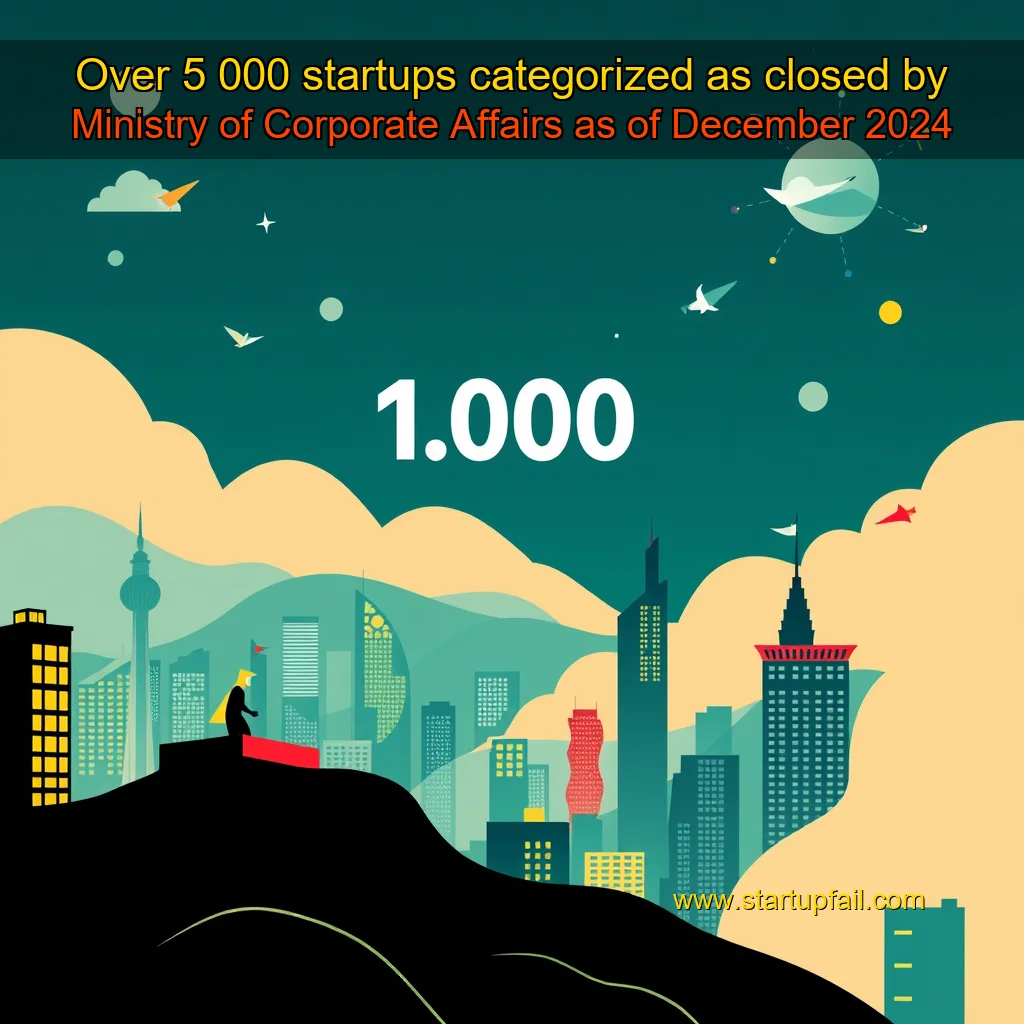
The data also highlights the challenges faced by startups in India, including high competition, regulatory hurdles, and limited access to funding.
The State of Startups in India: Challenges and Trends
High Competition and Regulatory Hurdles
The Indian startup ecosystem is characterized by intense competition, with many established companies vying for market share.
The top 5 states with the most startup closures in 2022 were: Maharashtra, Karnataka, Delhi, Uttar Pradesh, and Telangana.
The State of Startups in India: A Look at the Top 5 States with the Most Startup Closures in 2022
A Year of Challenges for Startups
The year 2022 was marked by significant challenges for startups across India. The COVID-19 pandemic, economic uncertainty, and regulatory hurdles all took a toll on the startup ecosystem. As a result, many startups were forced to shut down or scale back operations.
The Udyam portal, launched by the Ministry of Micro, Small and Medium Enterprises (MSME), was designed to help MSMEs register and obtain necessary certifications. The portal was initially intended to help MSMEs recover from the COVID-19 pandemic. However, the portal has been criticized for its complexity and lack of support for MSMEs. Many MSMEs have reported difficulties in navigating the portal and accessing the necessary certifications. The closure of MSMEs has had a significant impact on the economy, with many businesses unable to recover from the losses incurred during the pandemic. The closure of MSMEs has also had a ripple effect on the employment of millions of people who rely on these businesses for their livelihoods.
The Impact of the Udyam Portal on MSMEs
The Udyam portal has been criticized for its complexity and lack of support for MSMEs.
The Challenges Facing MSMEs
The struggles of Micro, Small, and Medium-sized Enterprises (MSMEs) are well-documented. The COVID-19 pandemic has exacerbated these challenges, forcing many to shut down or significantly scale back operations.
The Importance of Learning from Failure
Failure is an inevitable part of the entrepreneurial journey. Every successful entrepreneur has experienced setbacks and failures along the way. In fact, Thomas Edison, the famous inventor, once said, “I have not failed. I’ve just found 10,000 ways that won’t work.” This quote highlights the importance of perseverance and learning from failure. The key to success lies in analyzing the reasons behind the failure and using that knowledge to improve future endeavors. Failure can be a valuable learning experience, providing insights into what works and what doesn’t.
The Current State of the Indian Startup Ecosystem
The Indian startup ecosystem has experienced tremendous growth in recent years, with a significant increase in the number of startups and investments. According to a report by the National Association of Software Services Companies (NASSCOM), the number of startups in India has grown from 4,000 in 2010 to over 50,000 in 2020. This growth has been driven by a combination of factors, including government support, a large and growing consumer market, and a highly skilled workforce.
Key Statistics
The Role of Government Support
The Indian government has played a significant role in supporting the growth of the startup ecosystem. The government has implemented various policies and initiatives to encourage entrepreneurship and innovation, such as the Startup India initiative, which aims to create a conducive environment for startups to grow and thrive. The government has also provided funding and resources to support startups, including the creation of incubators and accelerators.
Government Initiatives
The Importance of MSMEs
Micro, Small, and Medium Enterprises (MSMEs) play a crucial role in the Indian economy. MSMEs are the backbone of the economy, providing employment opportunities and driving economic growth.