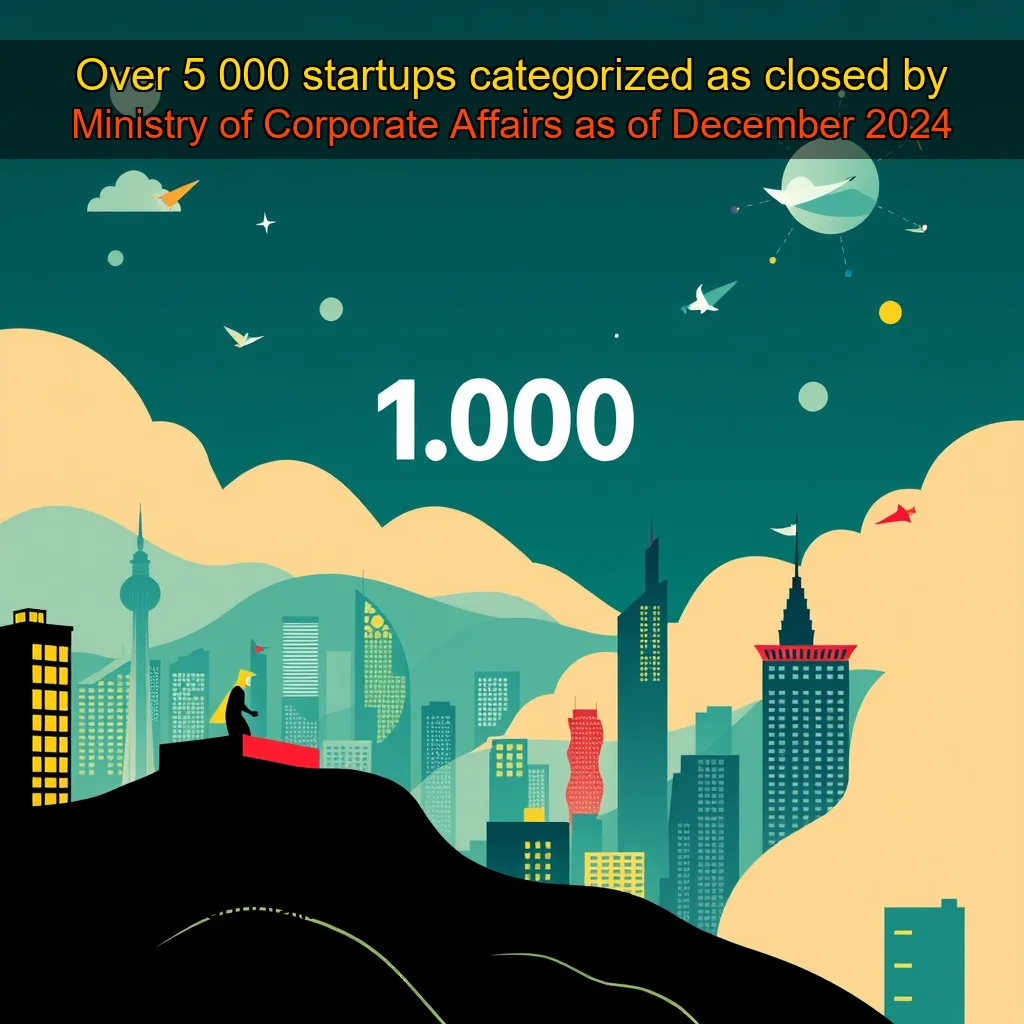
The DPIIT has been tracking the number of startups since 2016, and the data shows a steady decline in the number of active startups over the past few years.
The Rise and Fall of Startups
The number of startups in India has been steadily increasing since 2016, with a peak of 50,000 in 2020. However, the trend has been declining since then, with a significant drop in 2022.
Factors Contributing to the Decline
Several factors have contributed to the decline in the number of startups in India.
The top five states with the most startup closures in 2022 were: Maharashtra, Karnataka, Delhi, Uttar Pradesh, and Telangana.
The State of Startups in India: A Look at the Top 5 States with the Most Startup Closures in 2022
A Year of Challenges for Startups
The year 2022 was marked by significant challenges for startups across India. The COVID-19 pandemic, economic downturn, and regulatory hurdles all took a toll on the startup ecosystem.
The Udyam portal was launched by the Ministry of Micro, Small and Medium Enterprises (MSME) to provide a digital platform for MSMEs to register and obtain certifications.
The Impact of the Udyam Portal on MSMEs
The Udyam portal has had a significant impact on MSMEs in India. While it was designed to provide a digital platform for MSMEs to register and obtain certifications, it has also led to a wave of closures among MSMEs.
Key Statistics
Challenges Faced by MSMEs
MSMEs have faced several challenges since the launch of the Udyam portal. Some of the key challenges include:
Pandemic’s lasting impact on MSMEs, from credit access to long-term economic uncertainty.
The situation is further complicated by the pandemic’s long-term effects on the business landscape.
The Challenges Facing MSMEs
The COVID-19 pandemic has had a profound impact on the small and medium-sized enterprises (MSMEs) sector. The ongoing difficulties faced by these businesses are multifaceted and far-reaching. One of the most significant challenges is the lack of access to credit and venture capital. Many startups struggle to secure sustained funding, often due to stringent terms and conditions imposed by lenders and investors. High interest rates
These challenges can be particularly devastating for MSMEs, which often rely on external funding to sustain their operations. The lack of access to credit and venture capital can lead to cash flow problems, reduced investment, and ultimately, business closure.
The Long-Term Effects of the Pandemic
The pandemic has had a lasting impact on the business landscape, and MSMEs are not immune to its effects. The ongoing economic uncertainty and instability have made it difficult for businesses to plan for the future. Many MSMEs are struggling to adapt to the new normal, and the lack of support from governments and financial institutions is exacerbating the situation. Reduced consumer spending
The pandemic has also highlighted the need for more flexible and innovative financing options. Traditional lending models are often too rigid to accommodate the unique needs of MSMEs. The lack of access to alternative funding sources is further complicating the situation.
The Need for Support and Innovation
In order to address the challenges facing MSMEs, governments and financial institutions need to take a more proactive approach.
The Importance of Learning from Failure
Failure is an inevitable part of the entrepreneurial journey. Every successful entrepreneur has experienced setbacks and failures along the way. The key is to learn from these experiences and use them as opportunities for growth. In the context of MSMEs and startups, failure can be a valuable teacher, providing insights into what works and what doesn’t. Failure can help entrepreneurs refine their business models, identify areas for improvement, and develop new strategies. It can also provide a safety net, allowing entrepreneurs to test their ideas and minimize financial risks. Moreover, failure can foster resilience and perseverance, essential qualities for entrepreneurs who face numerous challenges and obstacles.
The Role of Ecosystem in Learning from Failure
The ecosystem plays a crucial role in learning from failure. It provides a platform for entrepreneurs to share their experiences, receive feedback, and learn from others. This collective knowledge can help entrepreneurs avoid common pitfalls and develop innovative solutions.
The Current State of the Indian Startup Ecosystem
The Indian startup ecosystem has experienced tremendous growth in recent years, with a significant increase in the number of startups and investments. According to a report by the National Association of Software Services Companies (NASSCOM), the number of startups in India has grown from 4,000 in 2010 to over 50,000 in 2020.